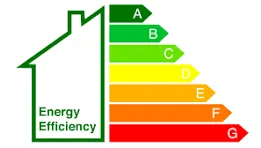
What's Changed for EPCs and Landlords?
PRS Energy EPC Rules Have Shifted Direction
What Landlords Actually Need to Know After the January 2026 Update
There’s been no shortage of noise about EPCs, “C by 2030”, and eye-watering retrofit bills.
In January 2026, the Government published its response to the consultation on improving energy performance in the private rented sector (PRS). This didn’t change the law overnight — but it did lock in the policy direction and quietly corrected several assumptions landlords had been working under.
Here’s what’s changed, what hasn’t, and what landlords should realistically be planning for.
First — this is not law yet
Let’s clear this up early.
The January 2026 publication is:
A Government response to consultation
A statement of settled policy
Not yet legislation
Not enforceable today
The legal changes will come later through amendments to the existing Minimum Energy Efficiency Standards (MEES) regulations, via secondary legislation.
Anyone claiming this is “already law” is wrong.
1. There will be a higher standard by 2030
The Government has confirmed that from 1 October 2030, privately rented homes in England and Wales will need to meet a higher minimum energy efficiency standard, broadly equivalent to EPC C.
That date is now fixed policy, not speculation.
However, the way compliance is measured is changing.
2. EPC letters won’t tell the whole story anymore
This is a major shift that many landlords have missed.
Instead of chasing a single EPC letter:
The primary focus will be fabric performance (how well the building retains heat)
Landlords must then meet one of two secondary standards:
Heating system efficiency, or
Smart readiness (controls, monitoring, optimisation)
This matters because:
Some properties struggle to reach “C” under the old EPC system
The new framework is more flexible, but also more technical
Letter chasing alone will no longer be enough.
3. Your maximum spend is capped – and exemptions last longer
This is where many landlords were misled.
Earlier consultation proposals talked about a £15,000 per-property spend.
The Government has now confirmed the cap at £10,000 — matching the original 2020 proposal, but with important improvements.
You won’t always spend the full £10,000
The Government’s own impact assessment estimates the average spend will be around £5,400 per property.
That’s nearly half the cap.
You only spend up to £10,000 if your property genuinely needs it — and even then, you stop once the next cheapest suitable measure would push you over the cap.
This is not a target. It’s a ceiling.
Spending from October 2025 counts
If you:
Install relevant energy efficiency improvements from 1 October 2025 onwards, and
Keep proper evidence of costs,
That spending can count towards your £10,000 cost cap.
This protects early action and removes the risk of “spending twice”.
Important exception:
Spending on fossil fuel heating systems will not count towards the cap.
If you hit the cap, you get 10 years’ breathing room
If you:
Install all suitable measures,
Spend up to £10,000 (or the next measure would take you over),
But still can’t meet the standard,
You can register a cost cap exemption, valid for 10 years.
That’s double the current 5-year exemption period.
This acknowledges that some properties are genuinely expensive to upgrade — and gives landlords time to plan for the next compliance cycle.
4. Exemptions are broader and more realistic
The January 2026 guidance confirms a wider and more practical exemption framework, including:
High-cost exemption
Where even the cheapest remaining measure exceeds the available cap.Solid wall insulation exemption
You can choose not to install solid wall insulation if it’s the only option left.Negative impacts exemption
Where you can evidence that a measure would damage the building or fabric.Property value adjustment exemption
For properties valued under £100,000, the cap drops to 10% of property value
(e.g. a £60,000 property = £6,000 cap, not £10,000).Third-party consent exemption
Where required permission is refused.Cost cap exemption
Once the £10,000 threshold is genuinely exhausted.
Most exemptions last 5 years, but the cost cap, property value adjustment, and negative impacts exemptions last 10 years.
This acknowledges a hard truth:
Not every property can be upgraded sensibly — and forcing it would shrink the rental market.
5. Early action is protected
If a property already achieves EPC C before 1 October 2029, that EPC can continue to be relied on after 2030, until it expires or is replaced.
That gives landlords who act early some breathing room — but it’s not permanent protection.
What hasn’t changed (and still catches people out)
The current minimum standard is still EPC E
Councils can still enforce existing MEES rules
2030 is not optional — it’s just not enforceable yet
Ignoring EPCs altogether is no longer a sensible strategy.
The real takeaway for landlords
The January 2026 response does two things at once:
It locks in the direction of travel
It caps the damage compared to earlier proposals
This is no longer vague policy chatter — but it’s also not the £15,000-per-property disaster many feared.
Landlords who:
Understand their stock,
Plan upgrades sensibly,
Keep evidence,
And don’t panic-spend,
will be in a far stronger position when the law eventually changes.
